
February 23
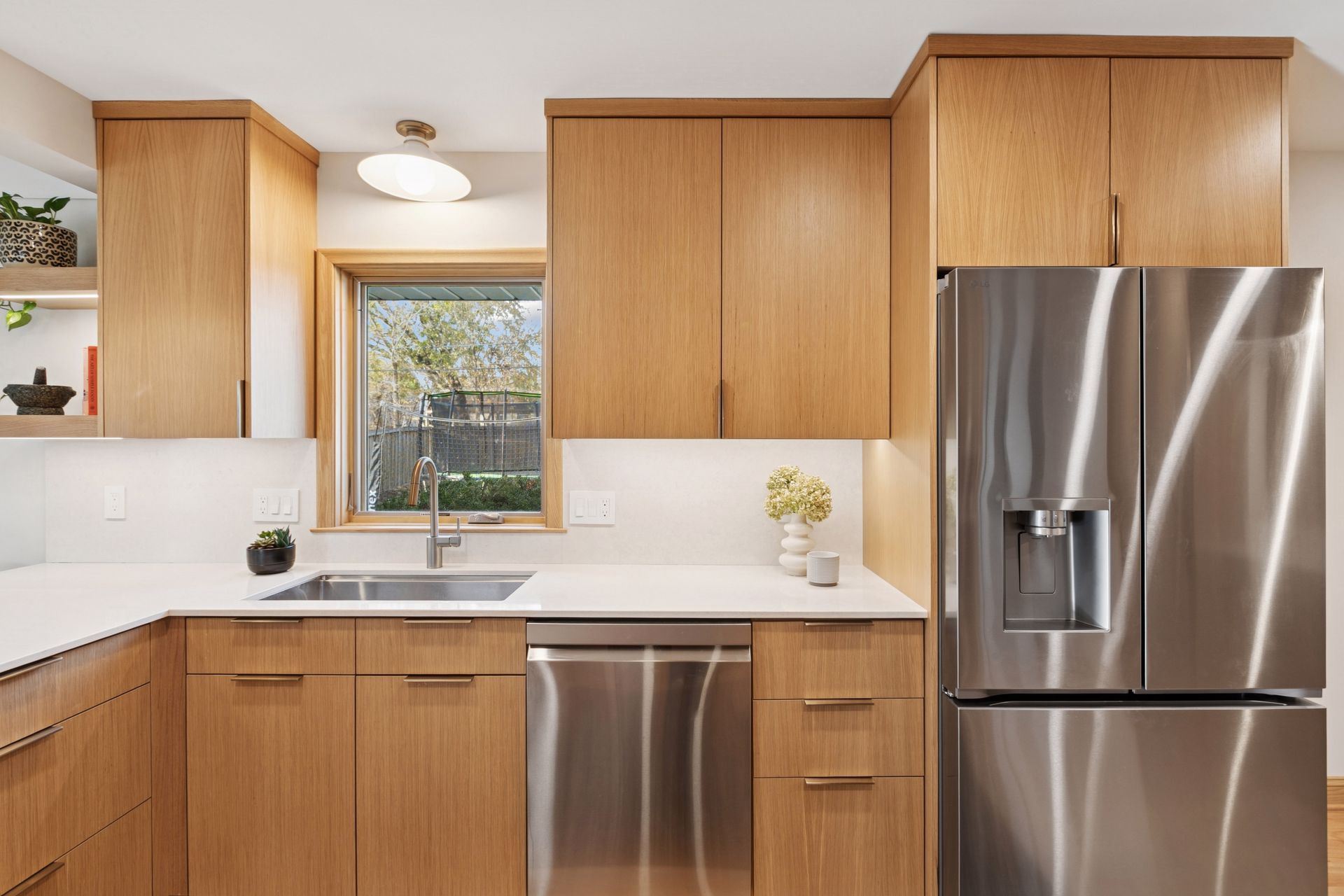
When spring hits the Twin Cities, homeowners start eyeing their kitchens and thinking about renovations. This year’s projects look noticeably different from what was popular even a couple of years ago. Starker, more minimalist kitchens are less commonly requested, replaced by spaces that feel warmer and better handle daily life.
HBRE has been working on kitchen remodeling projects throughout Minneapolis, St. Paul, and surrounding suburbs since 2013, and the trends emerging this spring reflect how families have adapted their cooking and gathering habits over the past few years. Some trends focus on practicality, while others bring back warmth and personality that got lost during the all-white kitchen era.
Twin Cities homeowners are opting for warmer colors that make kitchens feel welcoming. Beautiful greens, terracotta shades, deep navy blues, and soft creamy whites are creating beautiful spaces.
Two-tone kitchens continue gaining popularity, but the combinations have shifted. Families are choosing cream cabinets with forest green islands, or soft blue perimeter cabinets with natural wood islands. These color combinations add visual interest while maintaining a cohesive look.
Natural wood tones are making a comeback, too. Not the honey oak from the 1990s, but richer walnut, white and red oaks, alder, and maple that bring warmth without feeling dated. Some homeowners are mixing painted cabinets with natural wood open shelving or natural/stained wood islands for contrast.
Some homeowners want islands that can handle homework while dinner gets prepped, serve as casual dining spots for quick breakfasts, and provide enough room for multiple people to work together without bumping elbows.
Multi-level islands are a design feature that appeals to some. These feature a higher section for food prep that hides the mess from guests, with a lower section for comfortable seating. Some designs include raised bars that create natural separation between cooking and socializing areas while maintaining sight lines through the space.
Hidden storage within islands has become essential. Extra-deep drawers for pots and pans, pull-out trash and recycling bins, outlets built into it for charging devices, and dedicated spots for cookbooks or tablets all make islands work harder for busy families.
Spring 2026 brings a return to more enclosed storage, but with better organization systems built in.
Cabinet interiors are getting serious upgrades. Pull-out drawers for lower cabinets make it easier to access pots than digging through dark cabinets. Vertical dividers keep baking sheets and cutting boards organized instead of stacked in precarious piles. Corner cabinets now feature swing-out systems that bring items to the front, rather than creating black holes where things disappear.
Pantry systems have become more sophisticated, too. Walk-in pantries with adjustable shelves, sliding baskets, and separate areas for different types of food make it easier to keep track of what you have. If there’s no room for a walk-in pantry, tall pull-out cabinets can offer a great function in less space.
Appliance garages hiding small appliances like toasters, coffee makers, and blenders that used to crowd countertops. These enclosed spaces typically include outlets, so some appliances can stay plugged in and ready to use without cluttering up work surfaces.
Quartz countertops continue being popular with Twin Cities kitchen projects, with styles varying white with gray veining toward warmer colors with more subtle patterns. Varieties that mimic natural stone, like limestone or soapstone, are available, giving the look of natural materials with quartz’s better performance.
Porcelain countertops are catching on with families who want something with a different kind of durability than quartz. These thin slabs can take hot pans without damage, don’t stain as easily as natural stone, and most often take their looks from marble or natural stone. They cost more than quartz, which turns some people off, but those who go for them tend to be really happy with how well they hold up.
For backsplashes, we’re seeing some bigger tiles as well as mosaics. There are different subway tile looks. Handmade versions with edges that aren’t perfectly straight and glazes that vary a bit add some character without looking too busy.
Flooring choices increasingly lean toward luxury vinyl plank over traditional hardwood. Minnesota’s humidity swings can be tough on real wood, and modern LVP looks remarkably realistic while handling moisture, temperature changes, and heavy traffic better than the real thing. Wide planks in natural wood tones work with most design styles.
Real wood floors and luxury vinyl plank are both popular flooting options. The best option to work with your space and your lifestyle depends on a number of factors. We are happy to help you find an option that works for you.
Overhead lighting alone doesn’t cut it anymore. Spring 2026 kitchen projects include layered lighting that addresses specific needs throughout the space.
Under-cabinet lighting has become more standard because of the . LED strips provide task lighting for food prep while adding subtle ambiance when entertaining. These low-profile lights don’t create heat like older halogen fixtures and last for years without needing replacement.
Pendant lights over islands serve both function and style. Three pendants work well for islands in the 8-10 foot range, while longer islands might need four or five fixtures. Styles are moving away from industrial metal toward warmer materials like rattan, wood, or glass with brass or black accents.
In-cabinet lighting adds functionality while showing off glass-front cabinets or open shelving. Motion-activated options turn on automatically when doors open, making it easier to find items in deep cabinets.
People are finding some smart home technology features practical and rewarding.
Touchless faucets gained popularity in recent years and remain popular for their convenience and hygiene benefits. Voice-activated models let cooks turn water on and off or dispense specific amounts without having to touch anything with messy hands.
Refrigerators with cameras inside let families check what they have while grocery shopping, reducing duplicate purchases and food waste. Internal organization systems in newer models make better use of space while keeping items visible.
Smart ranges and ovens with remote monitoring and control let cooks start preheating on the drive home or check on dinner from another room.
Charging stations built into islands or counters keep phones and tablets powered up without cords snaking everywhere. Pop-up outlets hide beneath the counter when nobody’s using them, so you get charging spots without messing up the clean look.
Kitchen layouts are intentionally about traffic flow and work zones. Open-concept layouts are still popular, but some households prefer some separation between where you’re cooking and where everyone else is hanging out.
Walk-in pantries near the kitchen entrance make sense because that’s where you drop groceries when you come in from the car; no hauling bags across the whole kitchen. Baking stations can keep all the baking gear nearby in one place for greater efficiency.
Coffee bars can be in the main space or out of the main kitchen area and can include counter space for the coffee maker, somewhere to store mugs and coffee supplies, and a small sink.
Cleanup zones between the cooking and eating areas make the whole flow work better – from cooking to serving to cleaning up. These might have the main sink, dishwasher, trash and recycling bins, and a spot for cleaning supplies.
If you want your kitchen done by a certain time, you need to start planning way earlier than you think. Design phase takes time, permits take time, materials can take weeks or months to arrive, and our subcontractors book up fast. HBRE’s three-phase process handles all planning upfront, helping prevent costly changes and delays once work actually starts.
Trends are fine for ideas, but the best kitchens solve actual problems for how your home works for you as you cook, eat, and hang out. Twin Citiians thinking about kitchen projects this spring are choosing features that solve real issues rather than just chasing whatever looks cool on Instagram.
Spring is the perfect time to tackle a kitchen remodel, but successful projects start with thorough planning. HBRE has been transforming Twin Cities homes since 2013 and knows how to create spaces that work for real people, not just magazine photos.
Contact HBRE today to schedule your free consultation and start planning a kitchen that fits how you actually live.
Loading…