
March 9
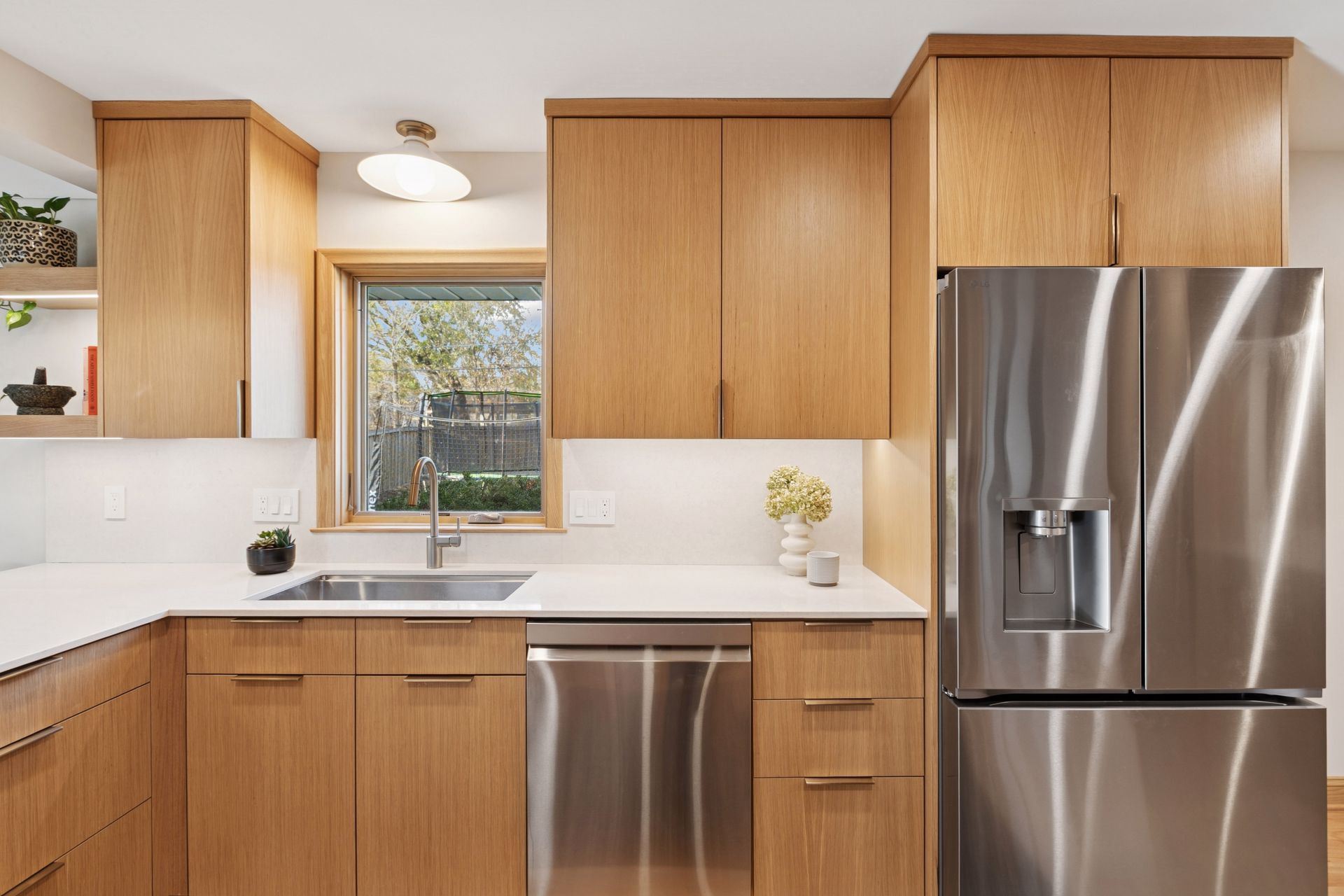
Countertops are arguably the most prominent feature in a kitchen remodel. They have a major impact on the space’s aesthetic, its functionality for everyday cooking, and its long-term durability. Kitchens in Minnesota face unique demands, including dramatic temperature changes from harsh winters to muggy summers, in addition to the rigorous use by home owners .
HBRE has installed countertops in hundreds of Twin Cities kitchens since 2013, and the questions homeowners ask stay pretty consistent. What materials hold up best? Which options fit different budgets? What looks good but also handles hot pans and spilled wine without permanent damage?
Quartz
Quartz dominates Twin Cities kitchen projects right now, and for good reason. These engineered stone slabs combine ground quartz with resins to create surfaces that look like natural stone but perform better in most situations.
Pros:
Cons:
Quartz works well for busy home owners who don’t want to fuss with maintenance. Spill something? Wipe it up. No special cleaners needed, no worrying about acidic foods etching the surface.
Granite
Granite was the premium choice for years before quartz took over, and it’s still going strong in Minnesota kitchens. Each slab is unique since it’s actual stone cut from quarries, which appeals to homeowners who want natural materials.
Pros:
Cons:
Granite makes sense for homeowners who love natural materials and don’t mind occasional sealing. It handles Minnesota winters fine as long as it’s sealed properly.
Butcher Block
Wood countertops bring warmth to kitchens in ways stone can’t match. Maple, walnut, and oak are common choices for Minnesota installations.
Pros:
Cons:
Butcher block works best as island tops or in specific areas rather than throughout the whole kitchen. Pairing it with more durable materials near sinks and stoves gives you the warmth without all the maintenance headaches.
Porcelain Slabs
The newest countertop trend hitting Minnesota involves large-format porcelain slabs that look remarkably like marble or other natural stones.
Pros:
Cons:
Porcelain makes sense for homeowners who want the marble look without marble’s maintenance nightmares.
Minnesota puts countertops through the wringer with temperature and humidity swings that would make other states jealous.
Winter Heating, Summer Humidity
Homes go from bone-dry heated air in January to humid and sticky in July. Materials that can’t handle these swings will crack, warp, or develop other problems over time.
Quartz and granite handle Minnesota’s mood swings without complaint. Properly sealed wood can work, but it needs attention. Laminate near windows that get direct sun sometimes shows problems over the years.
Thermal Shock
Setting a hot pan on frozen counters near windows in winter, or cold items on sun-warmed surfaces in summer, creates thermal stress. Natural stone handles this better than engineered materials or laminates.
Traditional Kitchens
Granite or marble (if you’re willing to maintain it) is a good fit for traditional kitchen designs. Warm granite colors complement wood cabinets, while classic white marble works with painted cabinetry.
Contemporary Kitchens
Quartz in solid colors or subtle patterns works well in modern spaces. White, gray, or black quartz with minimal veining creates the clean look contemporary designs need.
Transitional Kitchens
These in-between styles work with almost any countertop material. Quartz that mimics natural stone bridges traditional and modern elements nicely.
Farmhouse/Rustic Kitchens
Butcher block or honed (matte finish) granite/soapstone fits farmhouse aesthetics. These materials bring the warmth and natural feel farmhouse kitchens need.
The edge treatment affects both appearance and functionality. Simple edges cost less and show off stone patterns better. Fancy edges add cost but create more formal looks.
Common edge options:
Bullnose and ogee edges add to project costs. Waterfall edges, where material continues down island sides, create dramatic looks but roughly double material costs for those sections.
After installing hundreds of Twin Cities kitchens, HBRE sees what actually works for Minnesota families versus what sounds good but creates problems.
Best Overall Value: Quartz hits the sweet spot of durability, appearance, and maintenance for most homeowners. Mid-range quartz in classic patterns holds value and handles daily kitchen abuse without complaint.
Best for Serious Cooks: Granite takes the heat (literally) better than quartz. Homeowners who regularly use high-heat cooking methods appreciate granite’s ability to handle hot pans straight from the oven or stovetop.
Best for Low Maintenance: Quartz wins again here. No sealing, minimal fussing, just wipe and go. Busy families appreciate not having to add countertop maintenance to their already long to-do lists.
Best for Natural Look: Nothing beats real stone. Granite gives you patterns and colors that engineered materials can only approximate. Each slab is genuinely unique.
Countertop selection occurs during HBRE’s design phase, after layouts are finalized but before construction begins. This timing lets homeowners see actual slabs and samples rather than guessing from small chips or online photos.
Visit stone yards to see full slabs. Photos never capture how granite or marble actually looks, and color variations between slabs can be significant. Seeing the actual material you’ll get prevents disappointment when installation day arrives.
Bring cabinet samples or paint chips when shopping for countertops. What looks great with white cabinets might clash with cream or gray. Seeing materials together prevents mismatches.
Consider your actual cooking and living habits honestly. Love to cook and regularly deal with hot pans? Granite makes more sense than quartz. Rarely cook but want something that looks good and needs zero maintenance? Quartz is your friend.
Think about resale even if you’re not planning to move soon. Countertop choices made today will still be there in 10-15 years. Trendy colors or unusual materials might not age well.
Choosing Based Solely on Appearance
That gorgeous marble looks amazing, but if you’re not willing to seal it regularly and baby it, you’ll end up frustrated. Performance matters as much as appearance for surfaces you use daily.
Ignoring Backsplash Coordination
Countertops and backsplashes need to work together. Super busy granite with super busy tile creates visual chaos. Plan these elements together during the design phase.
Skimping on Thickness
Thin countertops (2cm) cost less than standard thickness (3cm) but look cheaper and are more prone to damage. The savings rarely justify the compromised appearance and durability.
Forgetting About Seams
Large kitchens need seams where slabs join. Ask installers where the seams will fall, and try to position them in less visible spots or at natural breaks, such as corners.
Countertop selection represents one of the most important decisions in any kitchen remodeling project. The right choice delivers years of good performance and appearance. The wrong choice creates ongoing frustration and potentially expensive problems.
HBRE’s three-phase process includes dedicated time for material selection, giving homeowners the information and samples needed to make confident decisions. The design team explains the pros and cons of different options specific to each family’s cooking habits, budget, and style preferences.
Contact HBRE to schedule a consultation and start planning your kitchen remodel. The team can walk through countertop options that fit your needs, budget, and how you actually use your kitchen.
Loading…