
December 7
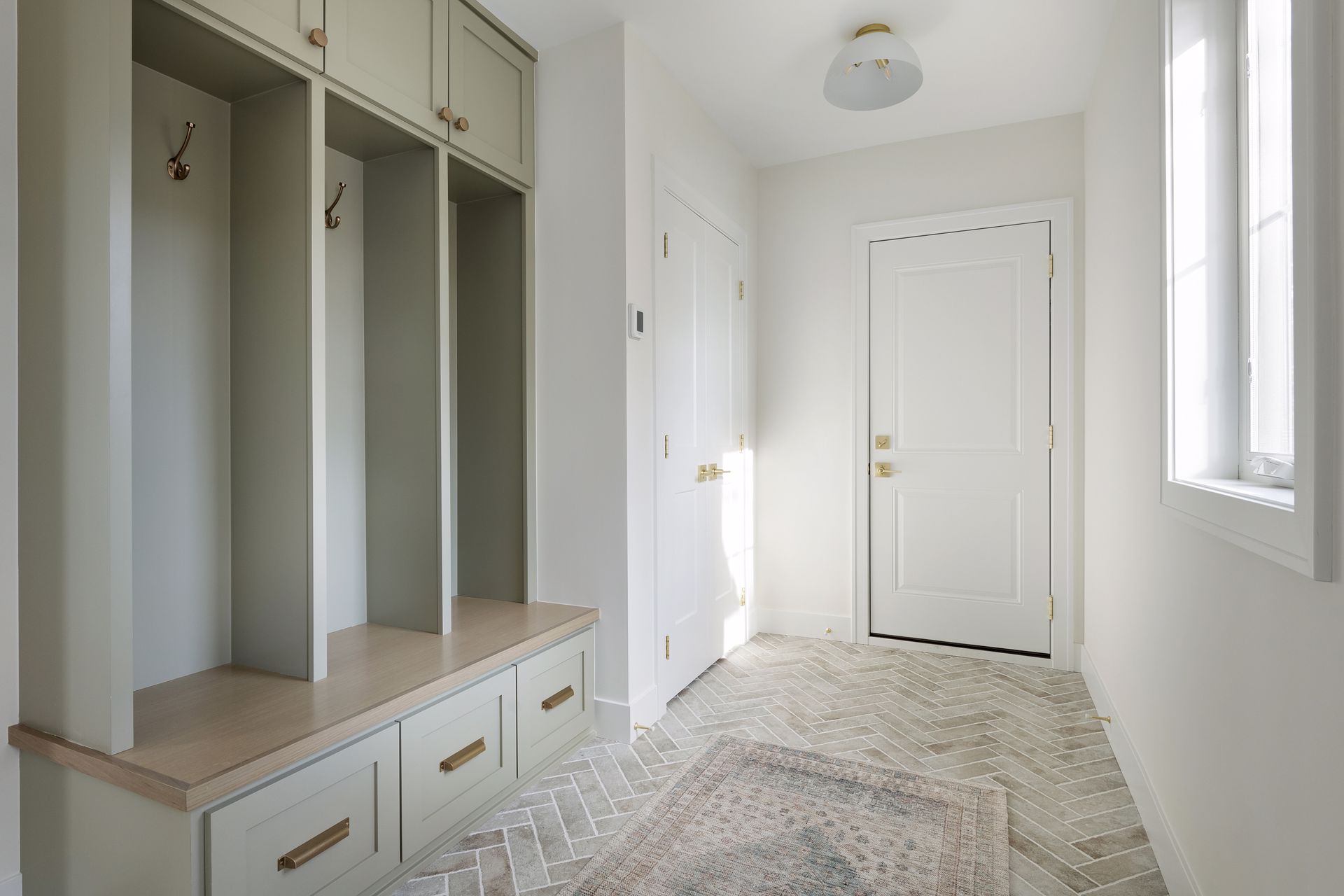
If you live in Minnesota, you know the drill. November through March, everyone tracks in snow, slush, salt, and mud. Wet boots end up by the door in a pile. Coats land on chairs or the floor. Hats and gloves vanish into whatever corner they get tossed. Your front hallway turns into a mess that you can’t quite stay on top of because there’s just going to be more snow tomorrow anyway.
A well-designed mudroom solves this problem. Not the Pinterest version with pristine white cubbies that would show dirt immediately, but an actual functional space built for Minnesota winters. A mudroom that can handle wet gear, dirty boots, salt-stained everything, and still look reasonably decent when guests walk through.
The question isn’t whether Minnesota homes need mudrooms. Most do. The question is how to design one that actually works for how you live, fits the space you have available, and doesn’t cost more than it should.
A mudroom isn’t just a bench with some hooks. For Minnesota winters, you need specific features that handle the amount of wet, dirty gear that comes through the door daily.
Boot storage needs to be open or ventilated, not closed cabinets where wet boots sit and grow mold. Somewhere for boots to drip and dry matters more than somewhere to hide them. A boot tray or mat that catches water and salt keeps your floor from getting destroyed.
Coat storage needs enough hooks or a rod with enough space that bulky winter coats can hang without getting crushed together. When coats are smashed together, they don’t dry properly and start to smell musty. Each family member needs their own spot, plus extras for guests.
Bench seating isn’t optional. Sitting down to take off winter boots while balancing on one foot gets old fast, especially for kids or anyone with mobility issues. The bench should be the right height for actually sitting, not just a decorative ledge.
Storage for hats, gloves, and scarves keeps small items from vanishing. Open cubbies work better than closed drawers because you can see what’s there. Baskets or bins keep things contained without requiring anyone to be particularly organized.
Flooring that can handle water, salt, and mud is critical. Tile works well and is easy to clean. Luxury vinyl plank handles moisture and looks decent. Regular hardwood in a mudroom is asking for water damage and scratched floors.
Not every home has room for a dedicated mudroom, but you can create mudroom functionality in various spaces.
If you have a true separate room off the garage or back door, you have the most flexibility. A dedicated mudroom can include built-in benches with storage underneath, a full wall of hooks and cubbies, and enough floor space for multiple people to handle their gear at once without crowding each other.
If you’re working with a hallway or entryway, you don’t have a mudroom room – you’re creating a mudroom area. Put a bench against one wall, hang hooks above it, add some cubbies or baskets beside it, and you’ve got functional mudroom space. The trick is keeping that area separate from the rest of your house so wet gear doesn’t migrate into your living room.
Some homes work best with mudroom features built into a laundry room or back hallway. This works particularly well if the laundry room is near the garage entrance. You’re already in there dealing with dirty clothes, so adding gear storage makes sense.
During HBRE’s design phase, we measure your available space carefully and create layouts that maximize function without wasting square footage. A mudroom doesn’t need to be huge to work well, but it does need to be planned thoughtfully.
Custom built-ins look great and can be designed exactly for your space and needs, but they cost more than off-the-shelf solutions. Whether custom makes sense depends on your space and budget.
Built-in cubbies with a bench can be sized perfectly for your family. If you have four people, you design four cubbies. If you need space for sports equipment or dog gear, you plan for that specifically. Built-ins also maximize awkward spaces that wouldn’t work well with furniture.
Freestanding furniture costs less and offers flexibility. A good storage bench and some wall-mounted hooks create functional mudroom storage without custom carpentry. If you move or your needs change, freestanding pieces can be rearranged or relocated.
Open storage versus closed storage is worth thinking through. Open cubbies and hooks are easier to use and keep things visible, but everything is also on display. Closed cabinets hide clutter but require more effort to use, and things tend to get stuffed in and forgotten. Most functional mudrooms use a mix – open storage for daily-use items, closed storage for things you don’t need as often.
Shoe storage is tricky because wet boots need air circulation. Cubbies with slatted bottoms or open shelving work better than solid shelves or closed cabinets. Boot trays on the floor are simple and effective, though they’re not the prettiest solution.
Mudrooms take a beating, so material choices matter more than in other rooms.
Flooring needs to be waterproof and easy to clean. Porcelain or ceramic tile is tough and handles everything Minnesota winters throw at it. Luxury vinyl plank costs less than tile and still manages moisture well. Skip hardwood, laminate, or carpet unless you enjoy replacing damaged flooring.
Bench materials should be durable and easy to clean. Wood benches are traditional and comfortable, but can get water-stained if not sealed properly. Wood with a durable finish or painted wood holds up better than natural wood. Upholstered bench cushions look nice, but quickly get dirty and wet in a mudroom that’s actually used.
Paint finishes matter too. Semi-gloss or satin paint on mudroom walls is easier to wipe clean than flat paint. Mudroom walls get touched by dirty hands, bumped by bags, and splashed by wet gear. Washable paint saves you from repainting every year.
Hardware and hooks should be sturdy enough for heavy winter coats. Those cheap adhesive hooks from the hardware store won’t hold up. Properly mounted coat hooks or a solid coat rack handle the weight of wet winter gear without pulling off the wall.
Some mudroom additions cost extra but provide real value depending on how you use the space.
A utility sink in the mudroom is handy if you have kids, dogs, or do outdoor hobbies. Rinsing off muddy boots, washing dirty hands before they touch the rest of the house, or cleaning up after yard work becomes much easier. If you’re already remodeling and running plumbing, adding a sink isn’t as expensive as adding one later.
Heated floors in a mudroom dry wet floors faster and make the space more comfortable in winter. If you’re putting in tile anyway, radiant floor heating adds comfort and function. It’s an upgrade that costs more upfront but gets used daily for half the year.
A drying rack or area for wet gear helps things dry faster and prevents that damp smell that develops when wet coats hang in a pile. This can be as simple as a rod mounted slightly away from the wall so coats have air circulation, or a dedicated drying area with better ventilation.
Pet gear storage makes sense if you have dogs. Leashes, waste bags, towels for muddy paws, and pet coats need homes. Building in specific pet storage during the design phase is easier than trying to figure it out later.
If you’re already planning a kitchen remodel or other renovation, adding mudroom space or upgrading your existing entryway makes sense. The design work happens at the same time, materials can be ordered together, and construction crews are already working on your home.
The in-home consultation at the start of HBRE’s process is when we talk about how you currently deal with coats, boots, and gear, what frustrates you about your current setup, and what you actually need. Those conversations shape mudroom designs that work for your real life rather than just looking good in photos.
Minnesota winters don’t care about design trends. Your mudroom needs to function well for six months of snow, slush, and salt every year. Getting the layout, materials, and storage right from the start means you’ll actually use and appreciate the space instead of working around it.
Ready to talk about adding a mudroom or upgrading your entryway during your remodel? Contact HBRE to schedule your complimentary consultation with one of our owners or project managers.
Loading…